• DH Benelux 2016

    Belval Campus Avenue de l'Université 2, Esch-sur-Alzette, Belval, Luxembourg

    This third edition of the annual DH Benelux conference takes place at the City of Science, located in Belval, the new urban district of Esch-sur-Alzette, Luxembourg. The conference rooms are located in the University of Luxembourg’s building Maison du Savoir at Belval Campus. 

  • Antwerp Summer Academy in DH 2016

    S.E.201 Prinsstraat 13, Antwerpen, Antwerpen, Belgium

    Demystifying Digitisation: A Hands-On Master Class in Text Digitisation

    This two-day workshop offers the perfect opportunity to become better acquainted with some of the main concerns that need to be addressed at the outset of both mass- and ad hoc digitisation projects. The core of the our programme exists of two half-day workshops on software packages that may help the researcher automate some aspects of the transcription process. The first will deal with ABBYY, still one of the best software packages around for OCRing digitised print materials. Focusing on the software’s possible advantages and pitfalls, this workshop will show the participants how to prepare their documents in order to achieve the best OCR results. The second workshop will introduce Transkribus, a software package that has recently made great advancements in optically recognising characters in handwritten materials. The programme will be completed by four (interactive) sessions on related topics that will be organised around these workshops.

  • Lecture Series: Elien Vernackt

    S.R.231 Rodestraat 14 (via ingang Lange Winkelstraat), Antwerpen, Antwerpen, Belgium

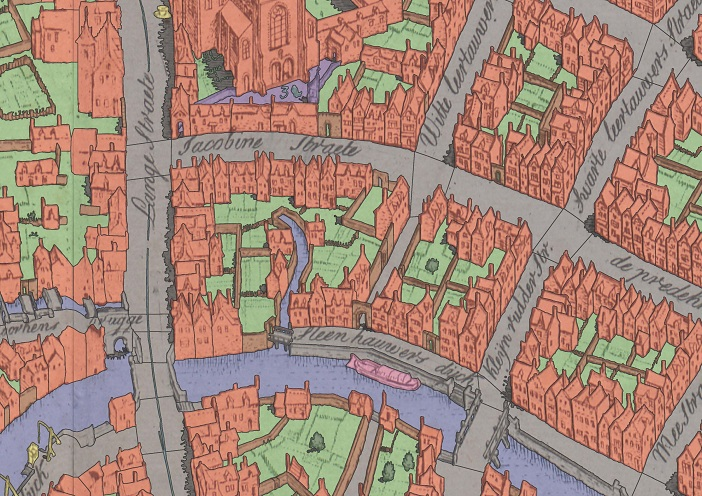
    The Magis Bruges Project

    In her talk, Vernackt will discuss the digitisation of a famous sixteenth-century map of Bruges, the development of a database, and a collaboration between different parties from both the academic and the GLAM sector. The MAGIS Bruges project responds to a variety of research interests and touches upon different issues within and outside the Digital Humanities community.

  • Lecture Series: Greta Franzini

    S.A.202 Prinsstraat 13, Antwerpen, Antwerpen, Belgium

    Text Reuse, Digital Breadcrumbs, and Historical Data.

    In her talk, Greta Franzini will discuss the case studies and activities of eTRAP. This project investigates the phenomenon of text reuse in order to advance automatic detection on historical data. Historical texts pose numerous challenges to automatically detect reuse. These challenges are, among others, the fragmentary survival of works, inconsistent referencing, but also the diachronic evolution of language. Unlike modern texts, where sources are consistently quoted and cited, historical texts are not always so transparent, thus opening up exciting opportunities for intertextual research.

  • Lecture Series: Erik Kwakkel

    S.A.206 Prinsstraat 13, Antwerpen, Antwerpen, Belgium

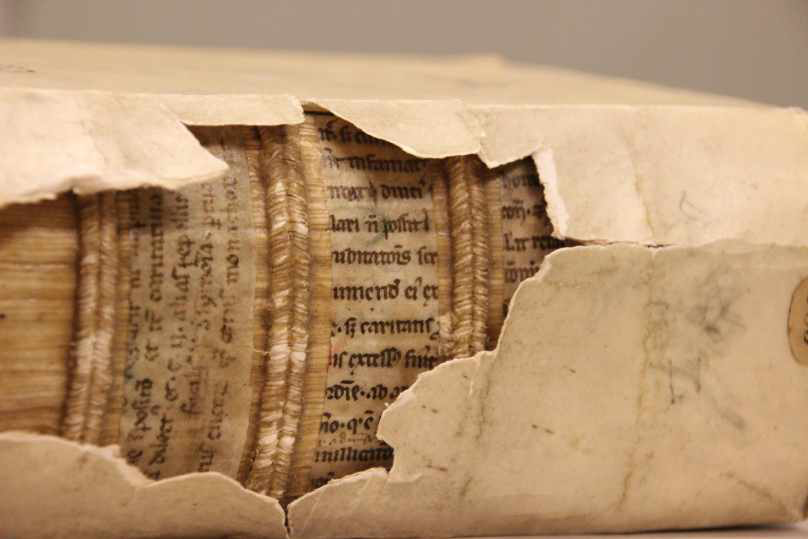
    Something Old, Something New: Medieval Manuscripts and Digital Reserach Methods

    In this talk, Erik Kwakkel shows how the study of medieval manuscripts can benefit from a digital approach. He presents two case studies: 1) How medieval script is studied in a quantified manner, using modest statistical research; 2) How MA-XRF, an x-ray technique, enables us to look inside early-modern bookbindings, revealing (and reading) medieval fragments that are hiding inside. These two examples will be taken as representatives of two common types of Digital Humanities research: one using digital techniques to do traditional research more efficiently, the other producing results that could not be gained in traditional research.

  • Beckett Digital Manuscript Project Training Workshop

    S.D.014 Prinsstraat 13, Antwerpen, Antwerpen, Belgium

    A Workshop on Digital Scholarly Editing, sponsored by the European Research Council (ERC), the Digital Scholarly Editions Initial Training Network DiXiT (Marie Curie ITN), and the University of Antwerp; organised by the Centre for Manuscript Genetics.

  • Lecture Series: Wido van Peursen

    S.D.019 Prinsstraat 13, Antwerpen, Antwerpen, Belgium

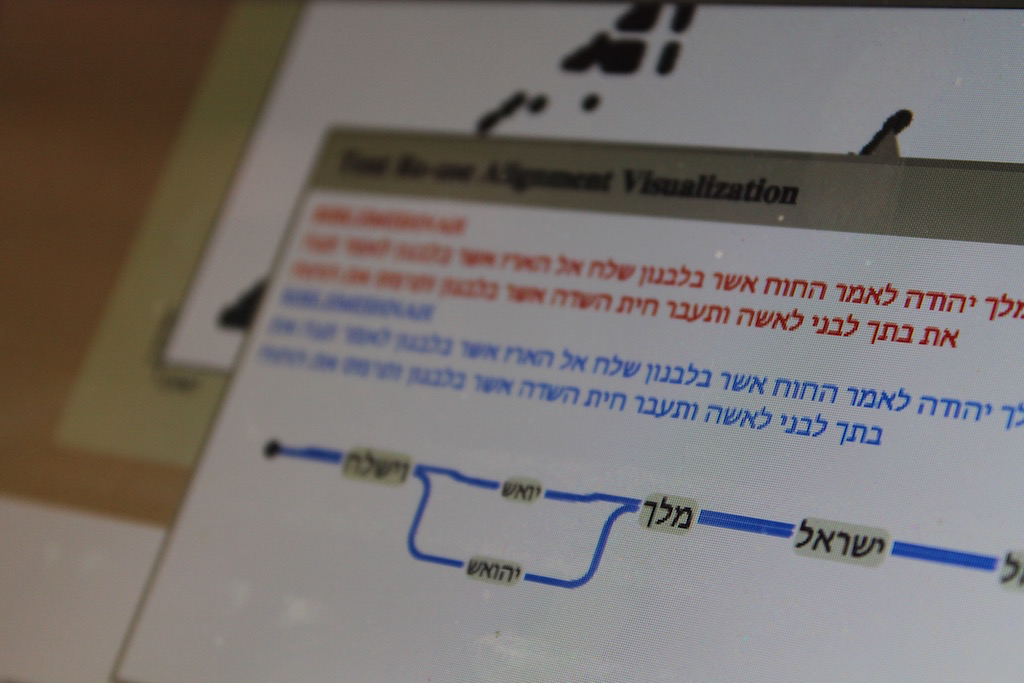
    A Statistical Approach to Syntactic Variation. The Case of the Hebrew Bible

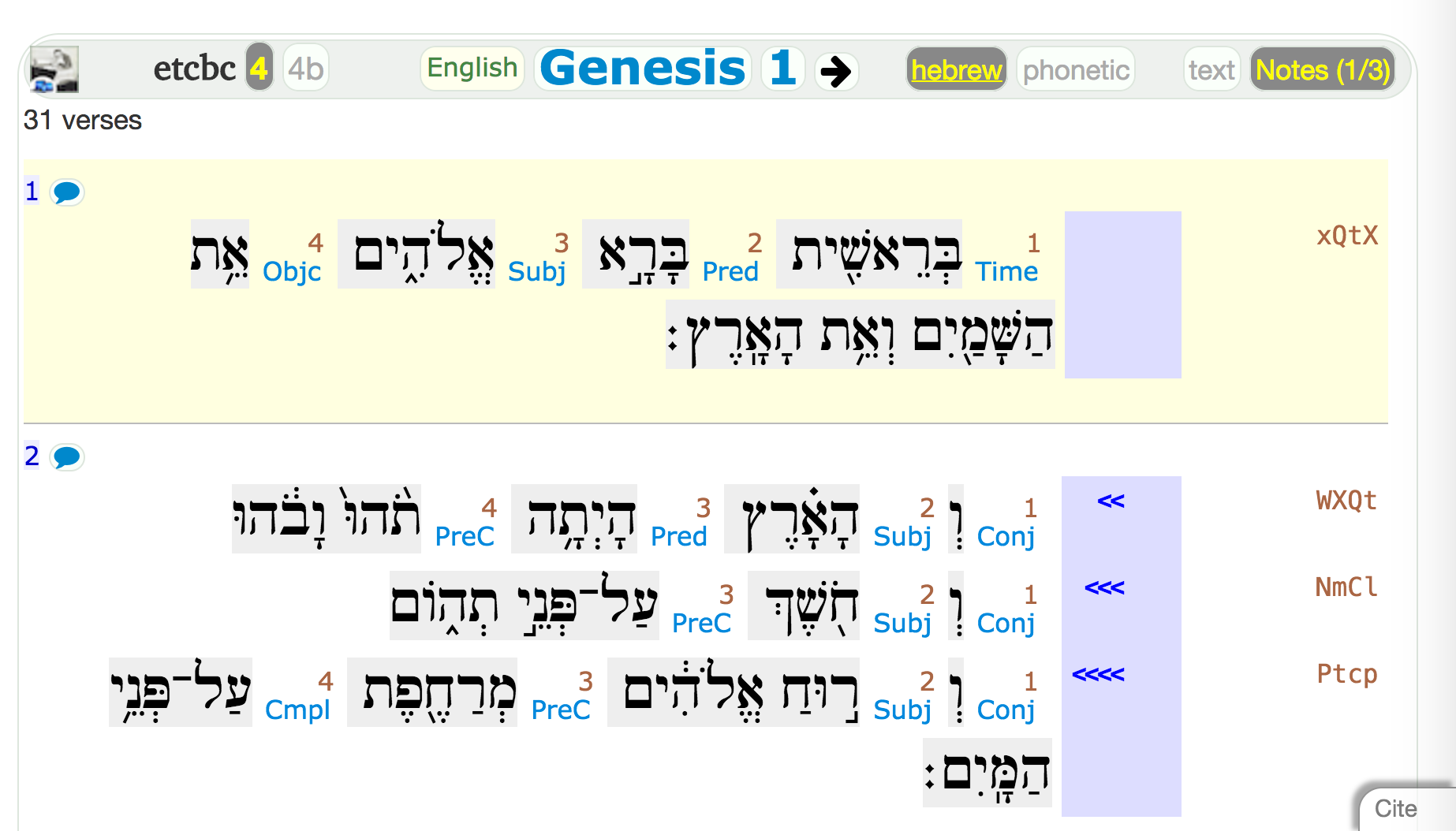
    In his talk, Wido van Peursen shows how combining traditional scholarship with a computational approach permits us to explore linguistic variation in the Hebrew Bible or Old Testament from new perspectives. The Old Testament provides a diverse and most compelling field of study. It has a complex composition history that, according to many scholars, stretches out over a period of more than a millennium. Naturally, this corpus of texts presents a great linguistic diversity. For long, researchers have attempted to understand and explain this diversity in all its facets. The promising results of quantitative methods show once more how Digital Humanities can provide a major contribution to an ongoing discussion; respecting, but also improving an honourable scholarly tradition.

  • Lecture Series: Jeroen De Gussem

    S.R.218 Rodestraat 14 (via ingang Lange Winkelstraat), Antwerpen, Antwerpen, Belgium

    The Exalted Expert vs. The Exact Experiment: Authorship Attribution, Stylometry and Literary Theory.

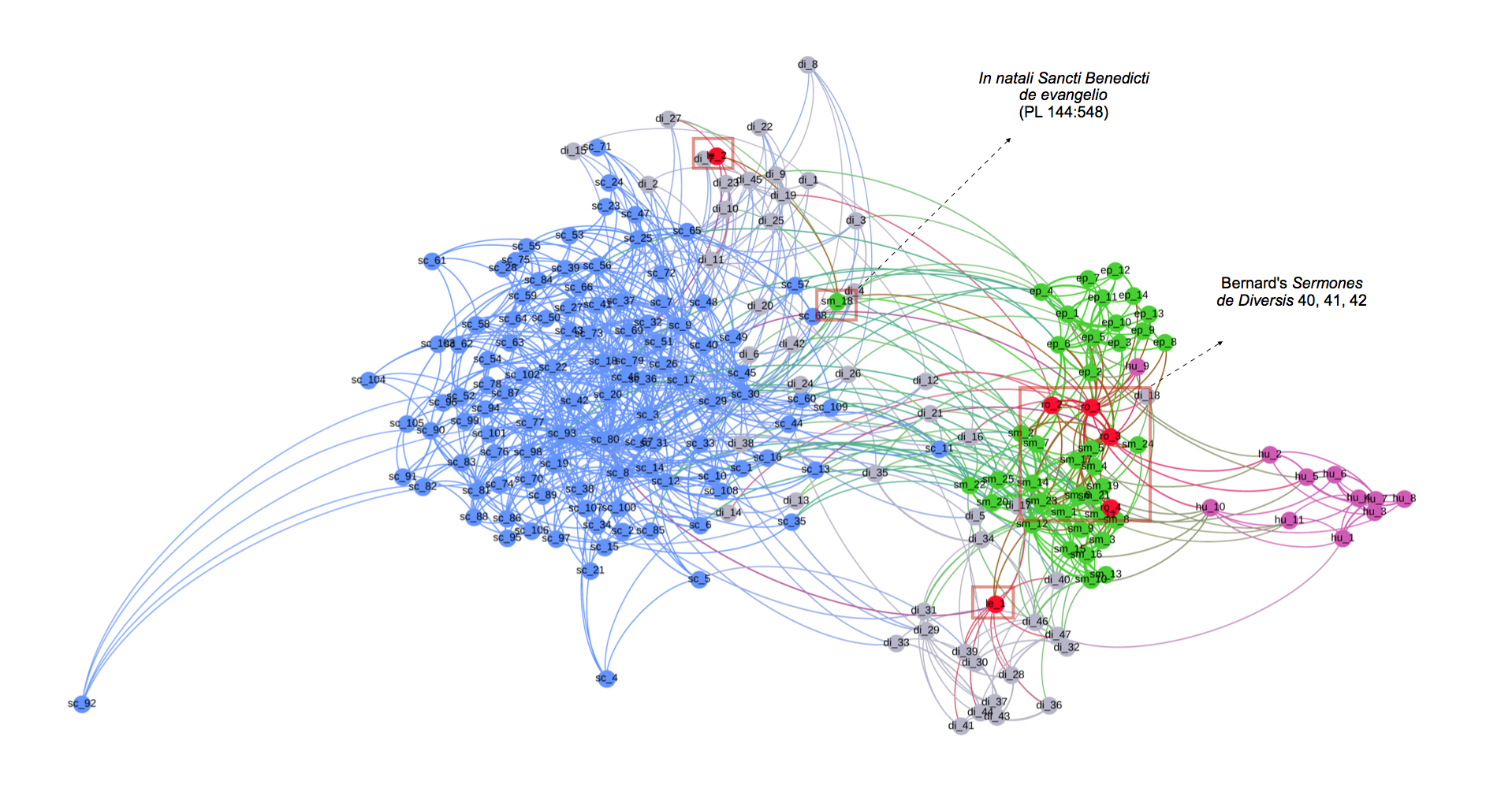
    In his lecture, Jeroen De Gussem confronts traditional methods of authorship attribution with more recent computational methods for determining the authorship of a text. He addresses a number of practical and theoretical issues. Take a so-called “stylome”, a collection of features in an authors’ personal language use which can be quantified as data and visualized in attractive figures. Can computational formalism (or perhaps computational stylistics) capture “style” by focusing on such a stylome? Where does computational stylistics succeed where traditional stylistics have failed, and vice versa? Are computational stylistics as “objective” (or “unsupervised”) as they purport to be, or do our results only reflect the answers we were hoping to find?

  • Lecture Series: Suzanne Mpouli

    S.R.218 Rodestraat 14 (via ingang Lange Winkelstraat), Antwerpen, Antwerpen, Belgium

    Computing Similes in French and English Literary Texts

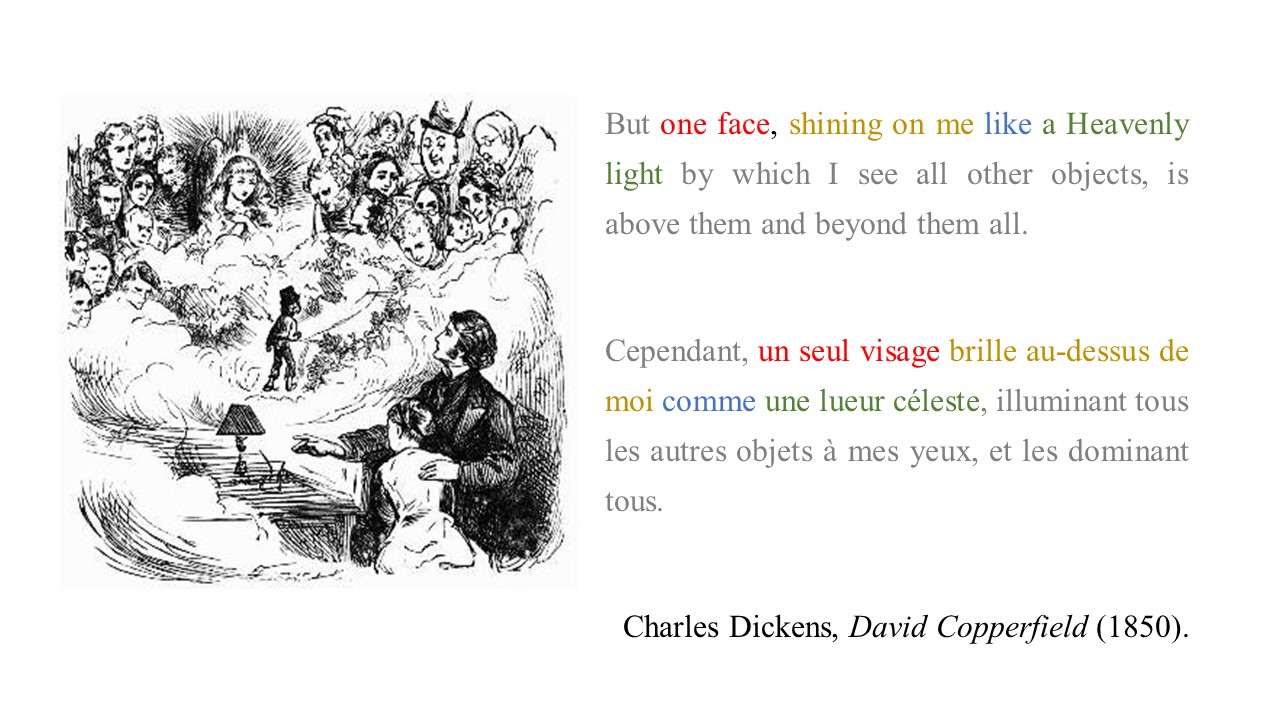
    Similes such as “Float like a butterfly, sting like a bee” abound in everyday language and are generally said to be particularly creative as well as stylistically relevant in literary texts.  In her talk, Suzanne will discuss the specificities and challenges related to the automatic detection of similes for literary purposes. To illustrate the interest of this task, she will present as case study the use of colour similes in a corpus of French and British novels published between 1810 and 1950.

  • Lecture Series: Ray Siemens

    S.C.001 Prinsstraat 13, Antwerpen, Antwerpen, Belgium

    Open Social Scholarship and the Scholarly Edition

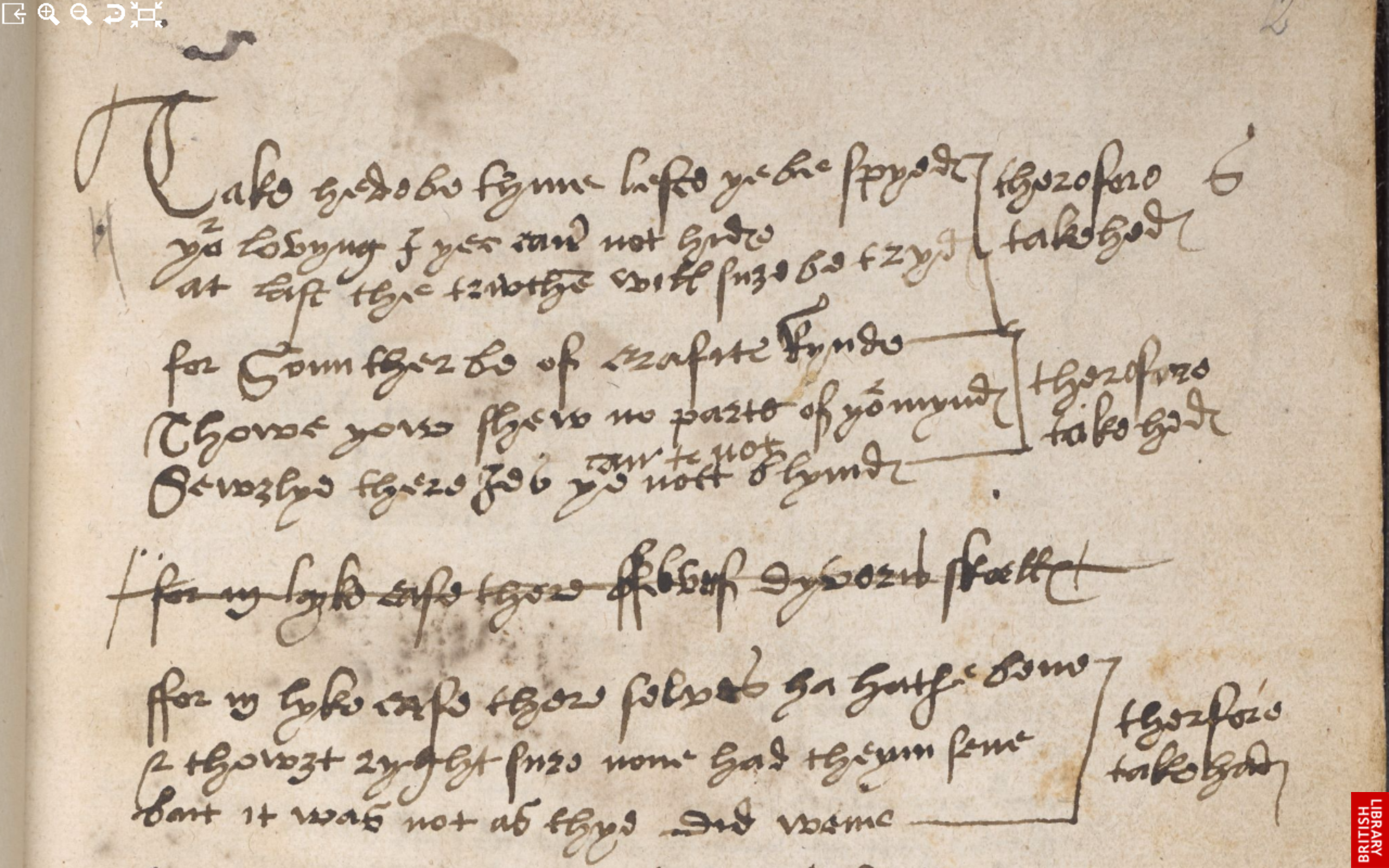
    This talk considers the nature of editorial methodological experimentation, in particular exploring the scholarly edition in the context of open social scholarship. Open social scholarship involves creating and disseminating research and research technologies to a broad audience of specialists and active non-specialists in ways that are accessible and significant. As a concept, it has grown from roots in open access and open scholarship movements, the digital humanities’ methodological commons and community of practice, contemporary online practices, and public facing “citizen scholarship” to include i) developing, sharing, and implementing research in ways that consider the needs and interests of both academic specialists and communities beyond academia; ii) providing opportunities to co-create, interact with, and experience openly-available cultural data; iii) exploring, developing, and making public tools and technologies under open licenses to promote wide access, education, use, and repurposing; and iv) enabling productive dialogue between academics and non-academics. Our example will be the social edition of the Devonshire MS (BL Add MS 17492), the first sustained example of men and women writing together in the English literary tradition, by a research team using crowd-sourcing technologies and operating in conjunction with an advisory group representing key methodological and area expertise.