• Lecture Series: Huw Jones

    S.E.207 Grote Kauwenberg 2, Antwerpen, Belgium

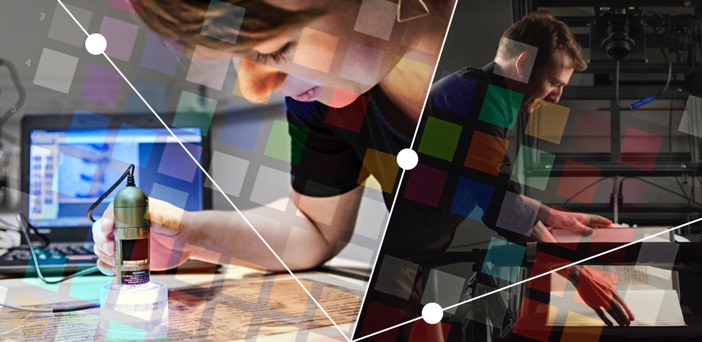
    Cambridge Digital Library has been supporting content-driven Digital Humanities projects since the online launch of the Isaac Newton papers in 2011, covering everything from 3,000 year-old Oracle Bones to aerial photography from the 1940s. This talk will explore some of the developments during this period – imaging as an investigative research activity, digital resources as datasets, the formalisation of digital humanities in Cambridge, and the growing emphasis on collaboration in the field as a whole. In this context, the speaker will focus on IIIF as an open and collaborative technology which is having a huge impact not just on the technical possibilities for the sharing and analysis of image data, but also on the culture of digital humanities.
    Free
  • Lecture Series: Magdalena Turska

    S.E.207 Grote Kauwenberg 2, Antwerpen, Belgium

    What does it take to publish an edition?

    What this talk is not, is a lesson in textual scholarship. What it aims to be instead, is a rough guide to the complicated interweave of standards, technologies and logistical issues behind the publishing process, and some advice on how to navigate this maze. We’ll then try to follow a chain of serendipitous events which eventually led to a proposal for an editors-first, standards-always and community-foremost tool that was brought to life in the new version 5 of the TEI Publisher. I will talk about some projects that were our inspirations, guinea pigs, challenges and benefactors (usually all at once) and hope to discuss the future of editions with you!

  • Lecture Series: Mattia Di Gangi

    S.R.218 Rodestraat 14 (via ingang Lange Winkelstraat), Antwerpen, Antwerpen, Belgium

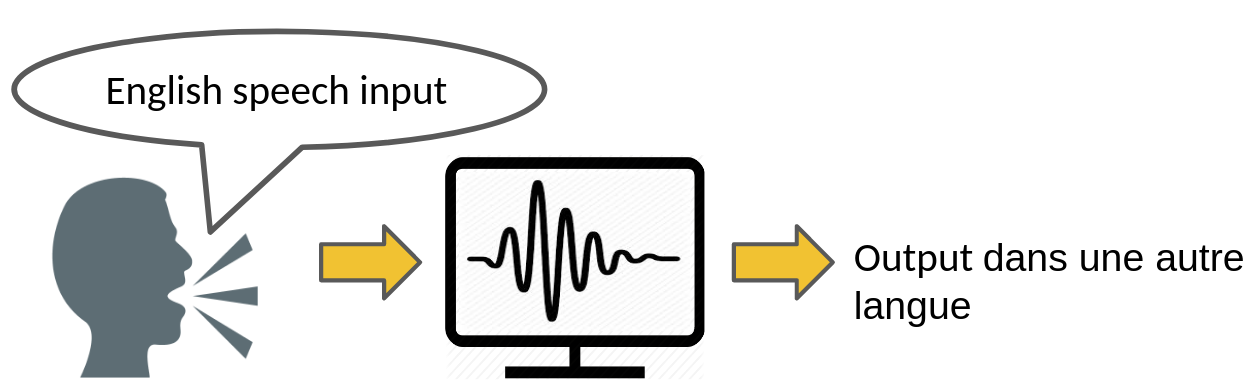
    Neural Machine Translation for Text and Speech

    In his talk, Mattia Di Gangi will introduce Neural machine translation (NMT). This is an exciting research area that is experiencing fast growth and attracting more and more groups from academia and industry, and some of its fundamental problems are still unsolved. Neural machine translation (NMT) reached such impressive results in the last few years that some industrial players, imprudently, claimed to have reached human parity.

  • Lecture Series: Julie Blake

    S.R.213 Rodestraat 14 (via ingang Lange Winkelstraat), Antwerpen, Antwerpen, Belgium

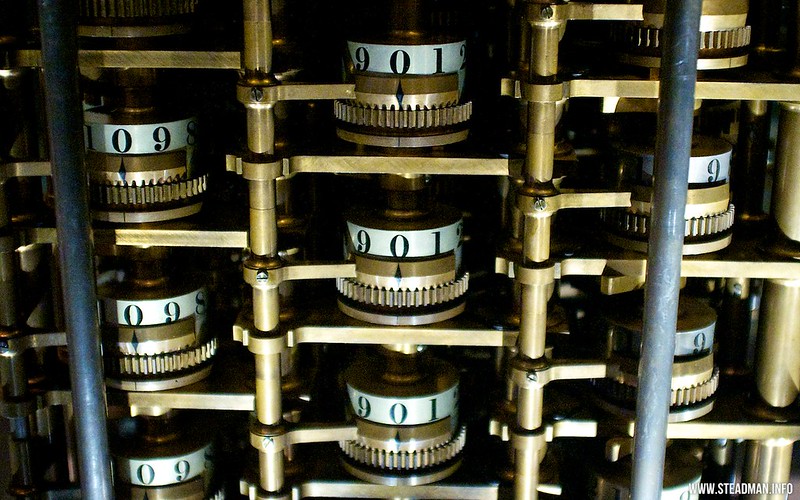
    Popular taste and public understanding of literature are shaped by many different life experiences and influences, including what happens in schooling. Dr. Julie Blake’s work is part of a body of research that seeks to understand the history of English literary education through its material artefacts and traces of classroom practice (eg Michael 1987, Rubin 2007 and Robson 2015). This history connects in interesting interdisciplinary ways with the history of literature, the reception history of different authors, the history of mass education, Britain’s colonial past and its postcolonial present. In her talk, Blake will share some of the practicalities and possibilities of building a digital “difference engine” for this research, and will discuss how this kind of approach might be developed and applied in other areas of literary history.

  • Lecture Series: Paul Aron

    S.ABC.301 Prinsstraat 13, Antwerpen, Belgium

    Relire la littérature des années 30 grâce aux humanités numériques: le cas des hebdomadaires d’information et de reportage.

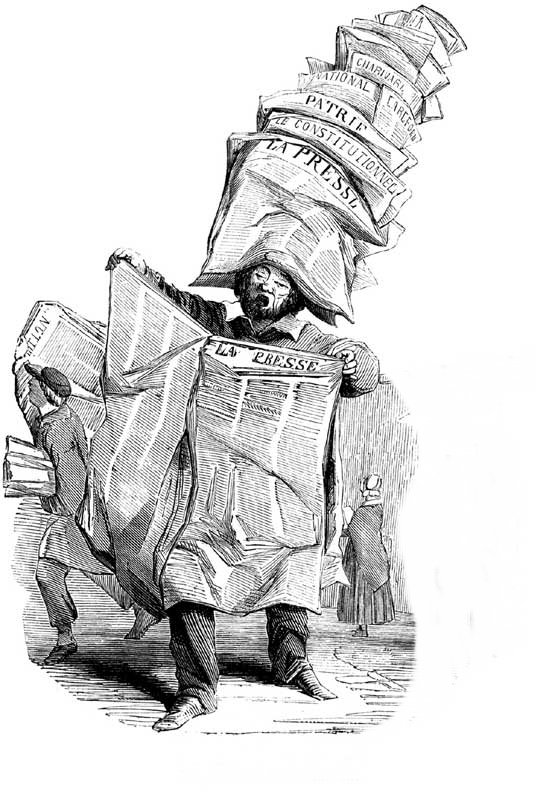
    Les années 1930 voient l’émergence des hebdomadaires illustrés par la photographie ou le montage photographique, comme Détective, Vu, ou Regards. Ces organes de presse contribuent à transformer le regard que les contemporains jettent sur le monde. Mais on ne peut toutefois les analyser du seul point de vue de l’actualité journalistique. Ces revues sont aussi animées par des écrivains et elles sont liées aux grandes maisons d’édition. L’exposé tentera donc de lier ce phénomène éditorial avec l’histoire de la littérature française, dans la perspective d’une approche transmédiatique.

  • Lecture Series: Ari Bergman

    online , Belgium

    The Collective Editing of the Talmud

    The Babylonian Talmud, known simply as the Bavli, is the collaborative effort of generations of sages. It is also the foundational legal and ethical document of rabbinic Judaism. Rather than being authored by any individual authors, it instead represents the collective work of the Jewish scholarly community in Babylonia over five centuries. From its inception, in the beginning of the third century, until the end of the eighth century it was transmitted orally, and it continuously evolved and developed collectively throughout the period. This presentation will analyze the unique process of its formation and early transmission and how it came to represent the first oral wiki editing process.

  • Lecture Series: Margherita Parigini

    S.SJ.117 Sint-Jacobsmarkt 13, Antwerpen

    The thesis « The Rule and the Doubt » is dedicated to the Italian author Italo Calvino, more precisely to the study of a narrative mechanism that plays a central role in his work: doubt used as the propulsion engine for writing. The aim of the thesis is to analyze this phenomenon in all its forms and to identify its various consequences in the narrative articulation of the text. The research is also supposed to develop a reflection on Calvino’s critical texts, exploring the hypothesis that the dubitative text is born at the crossroads of fiction and essay. In order to realize the research, an attempt was made to use different methods of analysis in a complementary manner: a more traditional approach derived to literary criticism, combined with a perspective linked to the DH dimension (e.g. Data Visualization). 

  • Lecture Series: Aafje de Roest

    S.D.013 Prinsstraat 13, Antwerpen, Antwerp, Belgium

    Hiphop lezen: kwantitatieve en kwalitatieve methoden voor letterkundig onderzoek naar hiphop

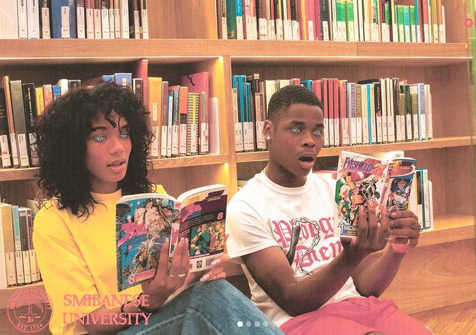
    Terwijl de wereld om ons heen steeds meer lijkt te verengelsen, grijpen zowel Nederlandse als Belgische jongeren massaal naar een jeugdcultuur in hun eigen taal: hiphop. Van Frenna tot Zwangere Guy en van Ronnie Flex tot Shay, Blu Samu of Coely – hiphop is de dominante jongerencultuur van dit moment, zowel wereldwijd als in Nederland. Die ongekende populariteit van hiphop, een door identiteitsvraagstukken gekenmerkt muziekgenre en idem jeugdcultuur, roept de vraag op hoe Nederlandse jongeren (artiesten en actief publiek) in hiphop hun culturele identiteit (her)definiëren. Op die vraag promoveert neerlandica en letterkundige Aafje de Roest (1993) aan de Universiteit Leiden (sectie Moderne Nederlandse letterkunde). Haar door NWO-gefinancierde onderzoek combineert kwalitatieve en kwantitatieve methoden om tot een antwoord op deze vraag te komen. Maar hoe onderzoek te doen naar een snel veranderende jeugdcultuur die misschien wel per definitie ‘ongrijpbaar’ moet blijven? In dit college verkent De Roest het antwoord op die vraag, en neemt zij je aan de hand van recente case studies uit de Nederlandse en Vlaamse scene mee in het spel van hiphopjongeren, die tegen een lokale achtergrond, maar in een werelds perspectief, hun culturele identiteit vormgeven.

  • Lecture Series: Julian Schröter

    S.D.015 Prinsstraat 13, Antwerpen, Belgium

    The challenges of investigating loosely structured genres and of operationalizing semantic content

    Literary studies are often dealing with genres that are well established in literary discourse but can, on closer inspection, not be identified on the level of textual features. In other words, there are loosely structured genres that are not instantiated as clear-cut text types. The German novella, which is split up into two genres, that of the ‚Erzählung‘ and that of the ‚Novelle‘, is such a disordered genre. Research in literary genres, however, usually presumes the existence of a common text type on the level of textual features that can be revealed, for example, with stylometric analysis or based on classification tasks. It is the aim of a larger project to reveal the latent structures of German novellas. The presentation gives a systematic outline of the challenge of analyzing the historical change of the novella as a loosely structured genre.

  • CANCELLED: Lecture Series: Siebe Bluijs & Lois Burke

    S.D.013 Prinsstraat 13, Antwerpen, Antwerp, Belgium

    Towards a Collection of Digital Literature from Flanders and the Netherlands (1971–2022)

    Digital literature is an umbrella term that encompasses differing types of multimodal works of literature that are all reliant on the digital environment for their production, dissemination and/or consumption (Rettberg 2018). Digital literature can refer to hypertext fictions, algorithm-generated poetry, works created in virtual reality, online fan fiction, and various other permutations. Digital literature emerged as a concept and a field of study in the 1980s and 1990s. The rapidly changing nature and function of digital media since then have urged new definitions and approaches to this art form.